
Most SaaS founders don’t struggle because they run out of ideas. Ideas are usually the easy part. The struggle starts when it’s time to turn those ideas into something real and they have to decide how that work actually gets done. At some point, every founder reaches the same moment where the vision is clear in their head, but the next step depends entirely on who they involve to help make it real.
This decision looks simple on the surface. Freelancers seem flexible. Agencies look professional. Specialised SaaS partners promise experience. All three options sound reasonable. All three can also quietly slow things down or create problems that only show up much later.
The difference is not obvious at the start. It shows up over time.
Working with freelancers and why it often gets messy
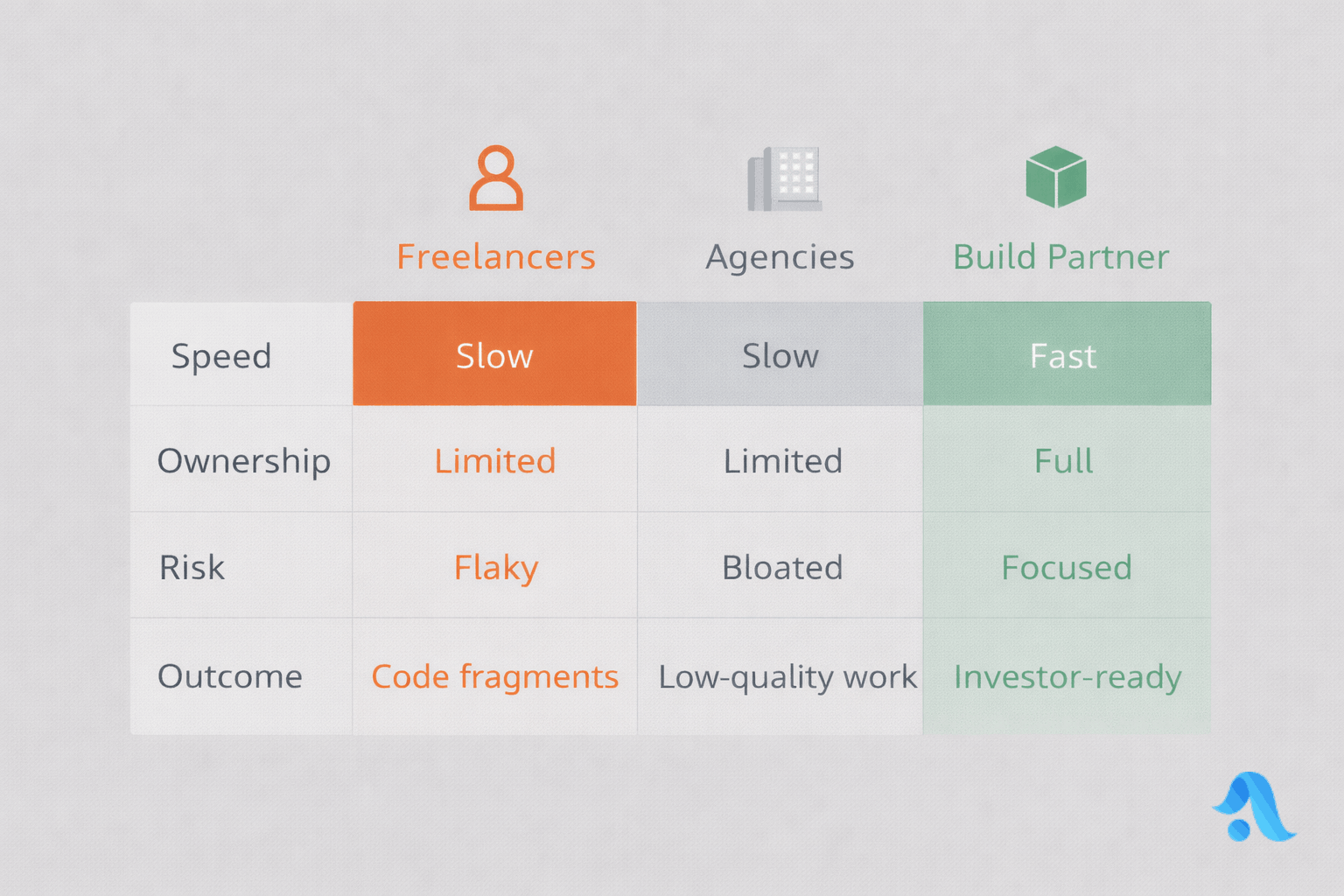
Freelancers are usually the first option founders look at. They are easy to find, quick to hire, and feel affordable compared to other choices. For small and clearly defined tasks, this can work well. If you need a single piece done and you know exactly what you want, freelancers can help you move forward.
The problem is that a SaaS product is not a collection of small tasks. It is a connected system where every part affects something else. When multiple freelancers are involved, each person usually works in isolation. Everyone focuses only on their own piece. Code quality changes from person to person. Decisions get made without the full picture. No one truly owns the product as a whole.
What often happens is that the founder slowly becomes the person holding everything together. They start making technical decisions, reviewing work, managing priorities, and trying to keep quality consistent. That role is hard even for someone with a technical background. Without one, it becomes stressful very quickly.
Freelancers usually do exactly what you ask for. They rarely push back or tell you that something might be a bad idea. If you already have strong technical leadership on your side, freelancers can support that setup. If you don’t, they often introduce risks that only appear once it’s expensive to fix them.
Working with agencies and why things slow down
Agencies promise structure and polish. You get access to designers, developers, and managers who are supposed to handle everything for you. On paper, it sounds ideal, especially for founders who want to stay focused on the business side.
In reality, early-stage founders often feel friction with agencies. Progress tends to move slower than expected. Costs add up quickly. Communication passes through several people before anything gets done. Simple changes require meetings, explanations, and waiting.
The founder explains the idea to one person. That person passes it to another. By the time it reaches the people doing the actual work, small details are already lost. Decisions take longer. Momentum fades.
Agencies are usually set up for stable, long-term work with clear boundaries. Early SaaS products need quick adjustments, close collaboration, and constant learning. When timelines are relaxed and budgets are large, agencies can make sense. When speed and clarity matter, they often feel heavy.
Working with a specialised SaaS partner and why it feels different
A specialised SaaS partner works in a very different way. Their entire focus is on early-stage products. They understand the messy parts, the uncertainty, and the need to make careful decisions early. They think in terms of systems and outcomes, not just tasks to complete.
The biggest difference is ownership. A good SaaS partner does not just take instructions. They question assumptions. They help narrow scope. They tell you what to leave out, not just what to add. They care about whether the product holds together over time, not just whether something gets finished.
You are not just paying for time. You are paying for experience and judgment. This kind of relationship requires trust and close collaboration. When it works, it feels less like outsourcing and more like extending your own team with people who have already seen these problems before.
For founders who want to move quickly without creating chaos underneath, this approach often works best.
How founders should actually choose
There is no single right answer for everyone. The right choice depends on where you are and what you need right now. Freelancers can make sense when the scope is small, expectations are clear, and you already have someone guiding technical decisions. Agencies can make sense when budgets are flexible and timelines are not tight.
SaaS partners make sense when speed matters, when long-term stability matters, and when you want guidance instead of just hands.
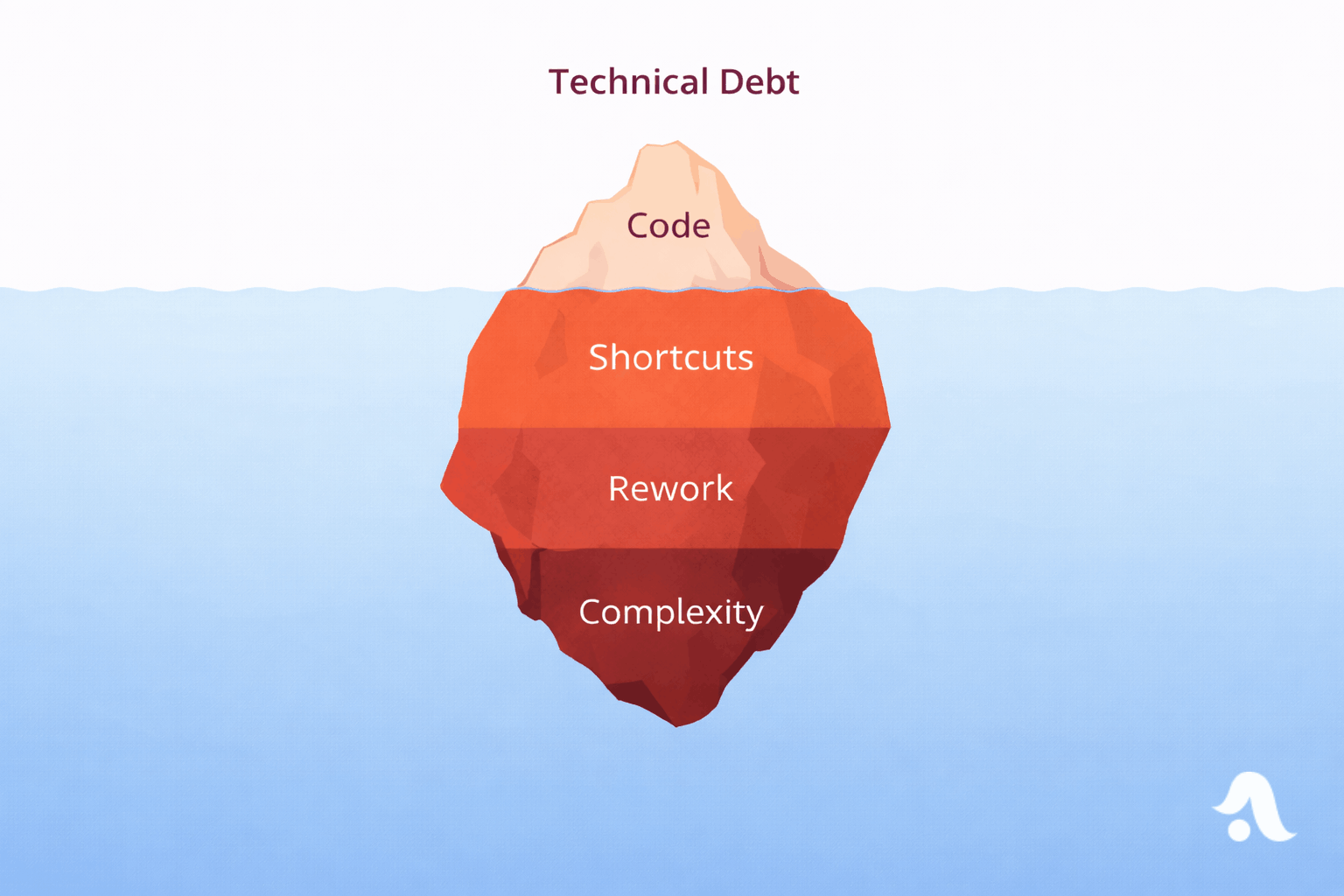
The biggest mistake founders make is choosing based only on cost. Cheaper options often become expensive later when things need to be redone. Slower setups quietly drain time and energy in ways that are hard to see early on.
The real takeaway
Creating a SaaS product is not about writing code. It is about making the right decisions in the right order. The people you choose to work with shape how those decisions get made and how painful the process becomes.
Choosing the right model protects your time, your money, and your ability to keep moving forward without burning out.