
Most SaaS founders don’t fail because they don’t care or because they avoid hard work. In reality, most of them put in long hours, make sacrifices, and genuinely try to do the right thing. The problem usually comes from the order in which decisions are made. Things that seem reasonable on their own slowly stack up in the wrong way, and nothing feels wrong until it is already difficult to recover.
These are not loud mistakes that blow everything up in one moment. They are quiet choices that feel safe and logical at the time. Over months, progress starts to feel heavier, energy drops, and money feels tighter than expected. By the time founders realise something is off, fixing it requires much more effort than it should have.
If you look closely at failed SaaS companies, you start to see the same patterns repeating again and again. Different products and different people, but the same issues underneath.
Creating a product before knowing who truly needs it
This is the most common way SaaS startups fail, and it often begins with excitement. A founder notices a problem that feels obvious to them. The solution makes sense in their head, and it feels like something people will naturally want once it exists. There is confidence, motivation, and a strong push to move fast.
So time and effort go into putting the product together.
Months pass. The product goes live. And then very little happens. A few people show interest. Some sign up. But no one feels an urgent need to use it. No one depends on it. No one feels stuck without it.
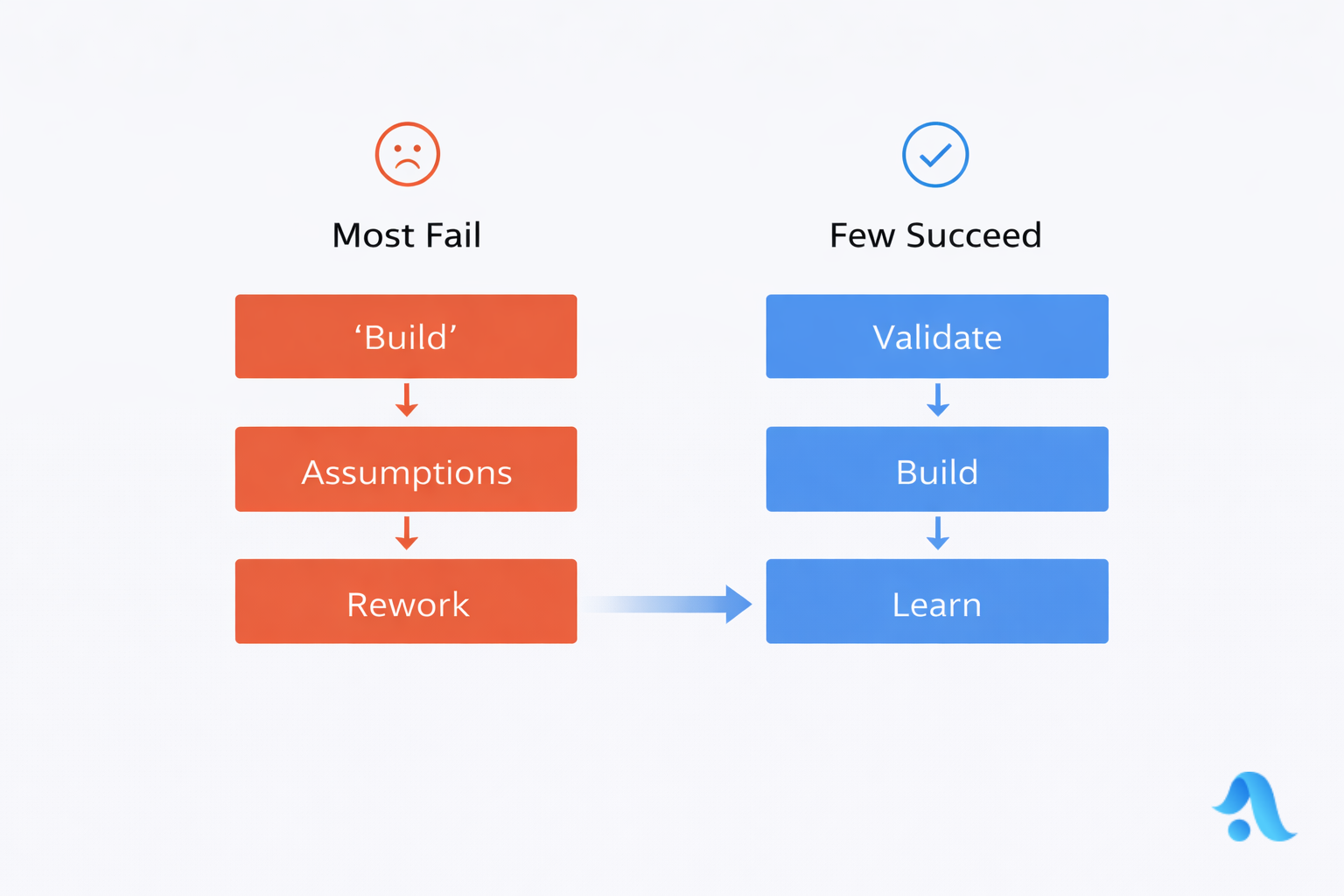
What was missing here was real proof that people actually needed this.
Real proof does not come from friends saying the idea sounds nice or from online reactions. It comes from speaking with real people who already feel the problem in their daily life and are actively trying to deal with it in some way. Before putting serious time and money into a product, founders need to clearly understand who this is for, what problem these people are facing right now, and how they are trying to fix it today.
If people are not already spending time, effort, or money trying to solve the problem, the product will struggle. Many startups fail because they focused on something interesting instead of something painful.
Choosing a messy way to put the product together
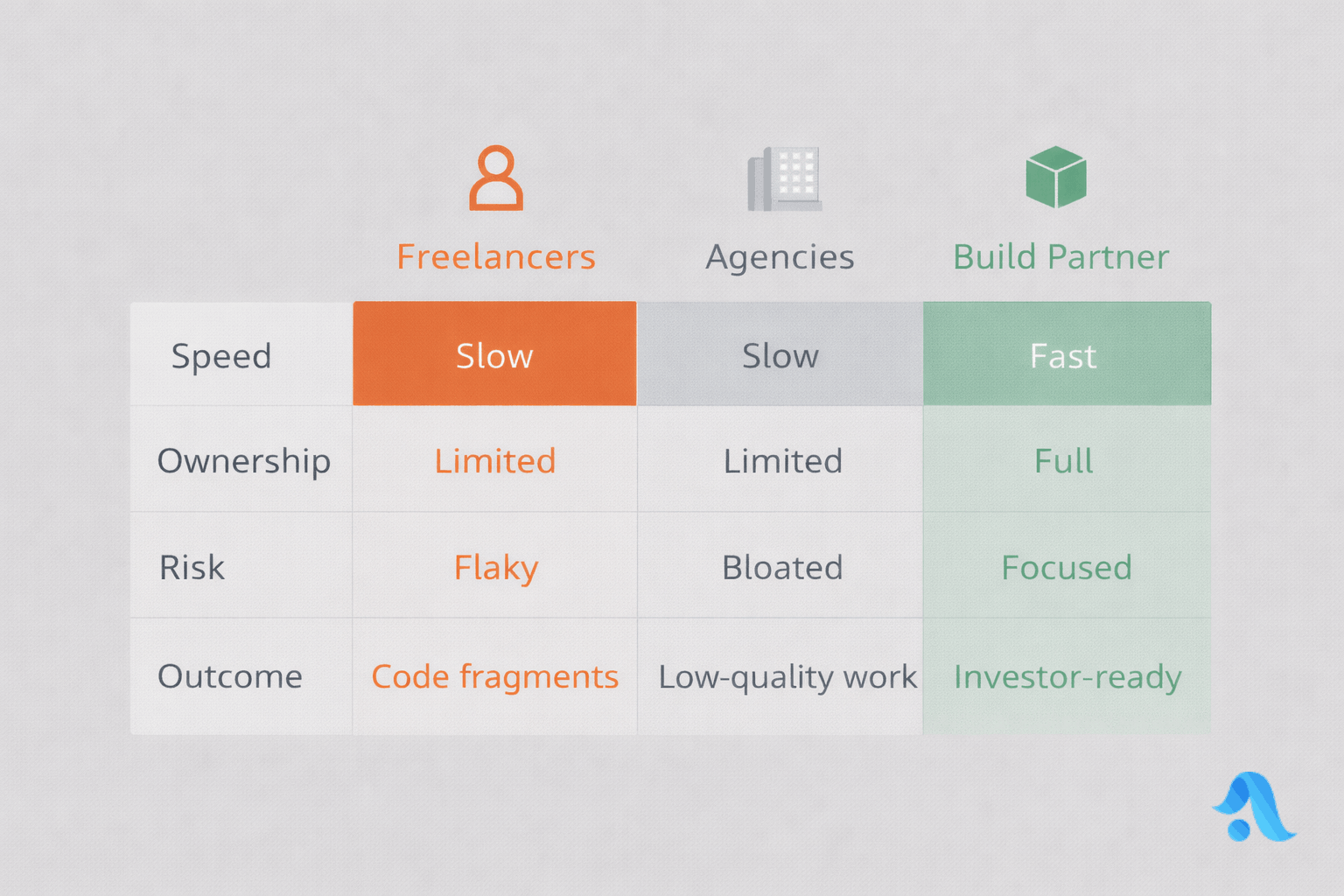
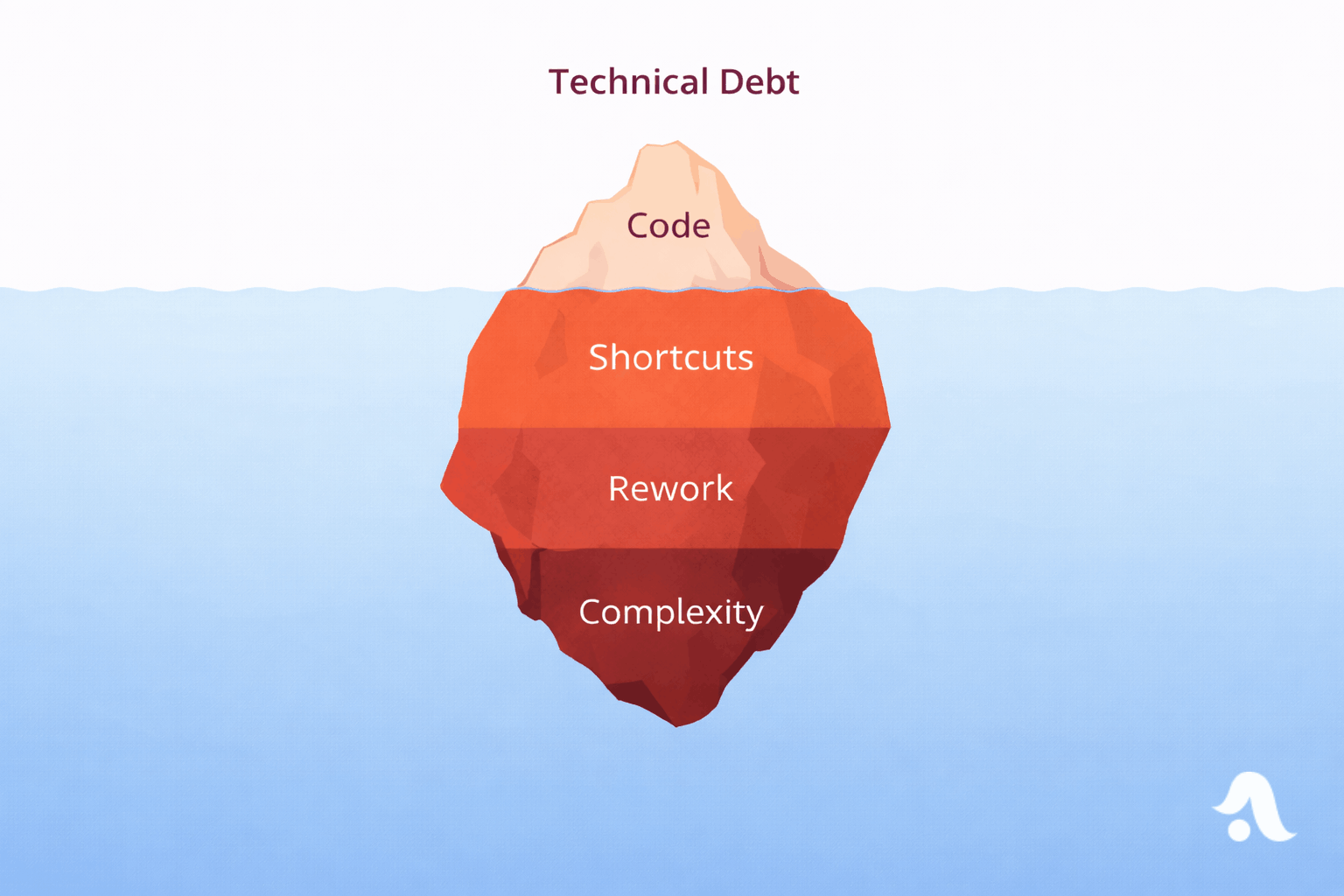
Problems with execution usually don’t show up immediately. Many founders start by working with freelancers because it feels flexible and simple. It feels easier to get started, change direction, and move people in and out as needed. At first, things move forward. Then small issues appear. Different people approach things differently. Parts of the product don’t fit together cleanly. One change causes another part to stop working properly. When something breaks, it’s unclear who should fix it fully instead of just patching it.
Other founders work with agencies, expecting structure and speed. What they often experience instead is slower progress, higher spending, and too many conversations just to make small decisions. Changes take longer than expected, and control slowly slips away.
In both cases, the deeper issue is the same. No one truly owns the whole product from start to finish. When ownership is split, small problems pile up and progress becomes harder to maintain.
Treating growth like something to worry about later
Some founders believe that if the product is good enough, people will naturally find it. That almost never happens. Many startups reach the point where the product is ready, but no one knows who it is meant for, where those people spend their time, or how to reach them in a clear way.
The product goes live and the question becomes, what now?
At that point, momentum is already gone. Thinking about how people will find and start using the product should happen while the product is being put together, not after it is finished. This does not require complex plans or fancy strategies. Even a simple and clear idea of who you are talking to and where they are is far better than guessing later. A product that no one sees cannot grow, no matter how good it is.
Ignoring how the product feels to use
Founders often excuse a rough experience by saying the product is still early. Users don’t see it that way. If the first steps are confusing, people leave. If things feel slow or unpredictable, trust disappears quickly.
Today, users compare every product they touch to everything else they use in their life, not to other early startups. You don’t need perfect design or extra features, but you do need one clear and smooth experience that works without friction.
A product that technically works but feels painful to use still fails.
Spending time and money on the wrong things
Money usually doesn’t disappear all at once. It fades away slowly. It gets spent on extra features no one asked for, tools that don’t help people use the product, and heavy work done too early in the name of being ready for the future. These choices are easy to justify in the moment. They sound responsible. In reality, they pull focus away from what actually matters. Early success depends on focus. You work on the things that move the product forward and delay everything else.
Every bit of time and money should help you learn, help people use the product, or make things more stable. If it doesn’t, it is costing you more than you realise.
How founders actually avoid these outcomes
Founders who do well are not smarter than everyone else. They are more careful with their choices. They make sure people truly need what they are creating before going too far. They choose simple and clear ways to put things together. They think early about how people will discover and use the product. They respect how the product feels from the user’s side. They protect their time and money.
Most SaaS startups don’t fail because of one big decision. They fail because small issues are ignored for too long. Avoiding those patterns doesn’t guarantee success, but it gives founders a much better chance than most people realise.